Mustard-Roasted Salmon & Veggies – The Sheet Pan Dinner You’ll Crave Again and Again
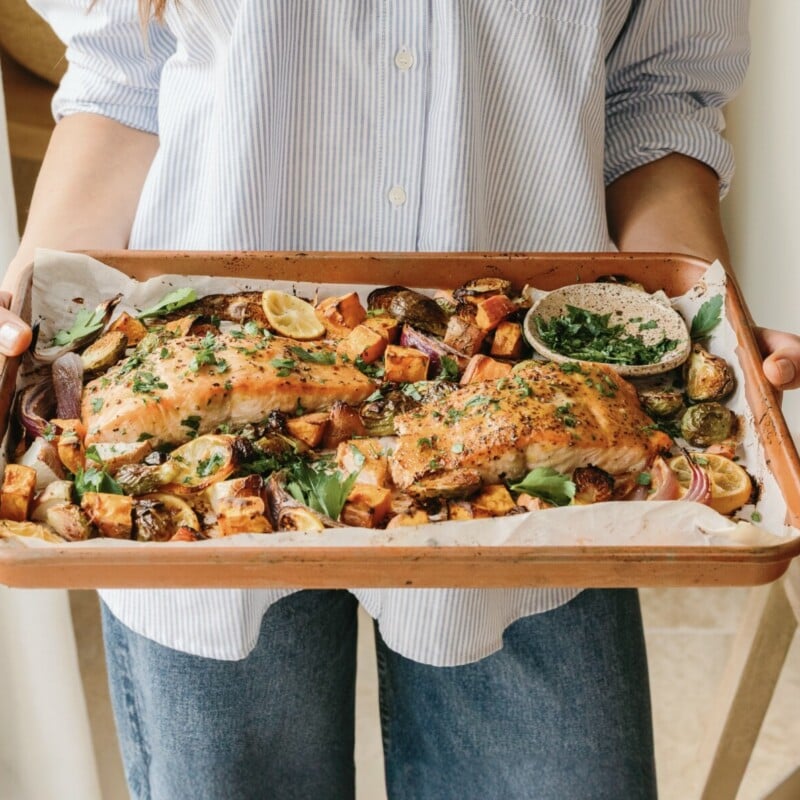
2025 is officially the year of the LDD—low-dish dinner. Who has time for a sink full of pots and pans? Not me. Instead, I’m leaning into meals that deliver big flavor with minimal cleanup, and the sheet pan is my undisputed hero.
Salmon is my go-to for a nourishing protein—it plays beautifully with just about any vegetable. And the beauty of this mustard-roasted version? Everything roasts together on one pan, meaning I get complex, satisfying flavors without the post-dinner scrubbing. I’ve been making it on repeat, especially on nights when I want something that feels special but requires almost no effort. Paired with a zesty lemon vinaigrette (I whip up a batch every Sunday), it’s simply unbeatable
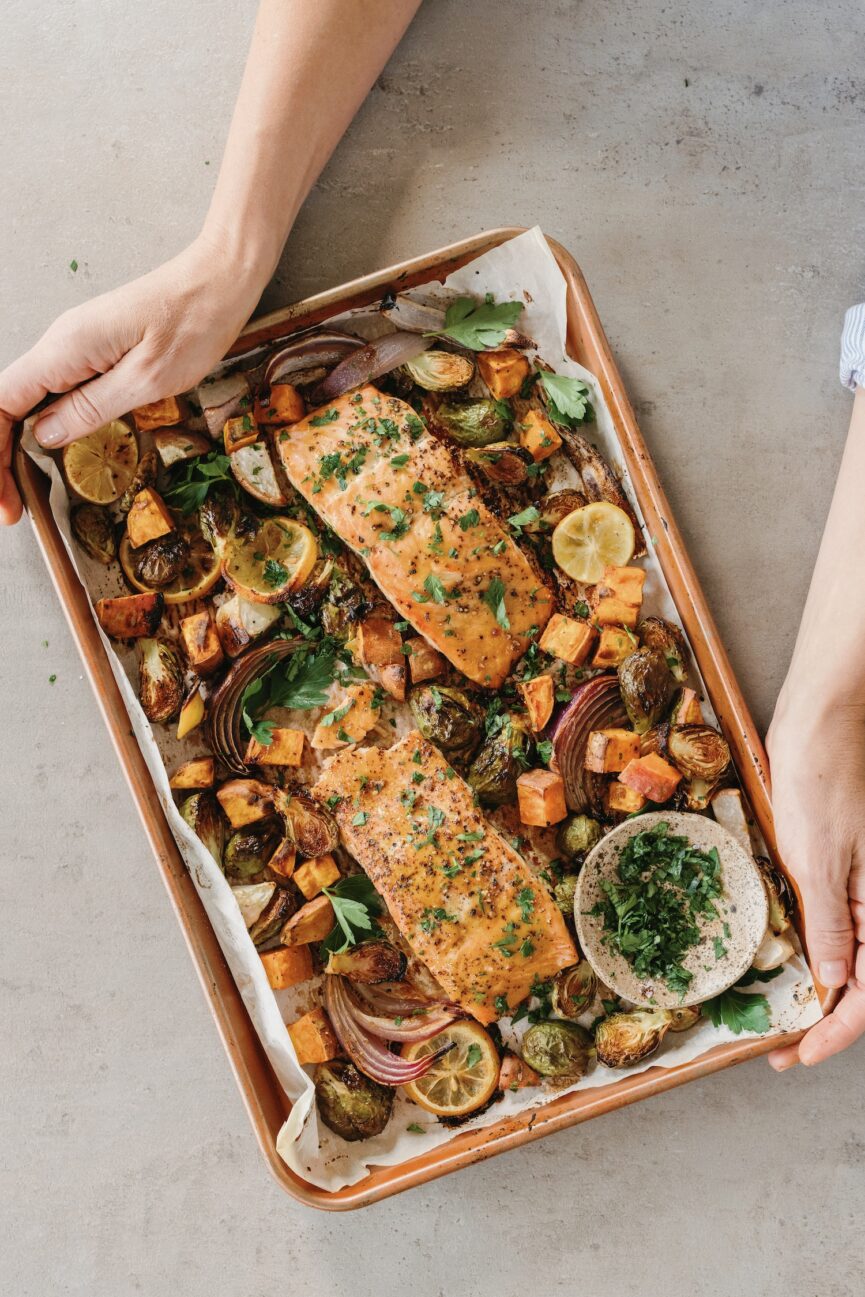
How to Make Mustard-Roasted Salmon & Veggies
- Prep the Veggies: Use your hands to toss the veggies in half the vinaigrette to coat evenly. Spread them on a sheet pan and roast at 400°F for about 30 minutes.
- Glaze the Salmon: Mix equal parts Dijon and brown sugar to create a quick, sweet, and tangy glaze and brush onto your salmon. Place salmon on the sheet pan with the veggies for the final 15 minutes of roasting.
- Make your Vinaigrette: Blend all of your ingredients together until they’re nice and creamy.
- Assemble a Salad: Toss together a simple salad with your choice of leafy greens and lots of parmesan.
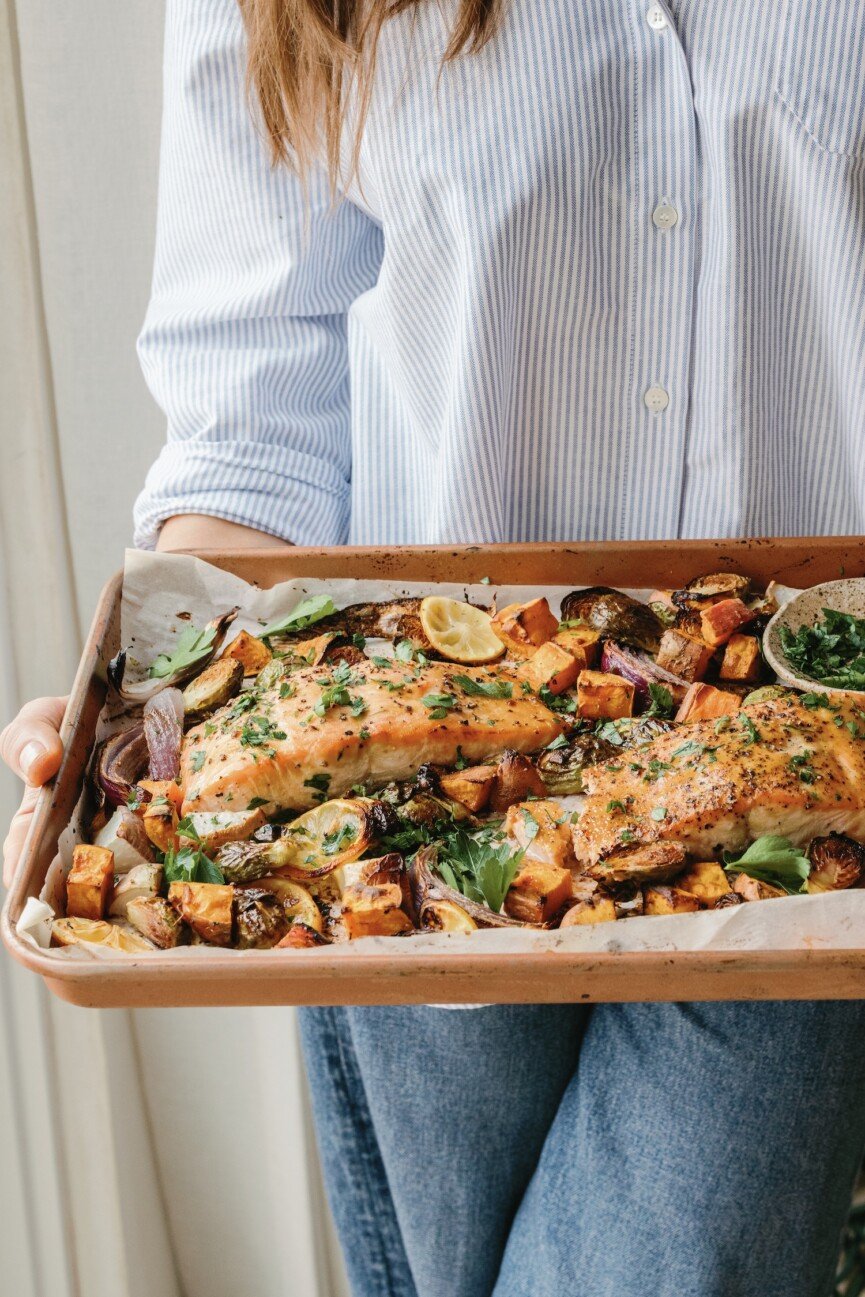
- Serve & Enjoy: Plate it up, and dinner’s on the table!
-
Tips for the Best Salmon Ever
- Use a hero ingredient (like Dijon mustard) in multiple ways to tie the meal together beautifully. It streamlines prep and packs the meal with an instant depth of flavor.
- Choose a vinegar variation for your vinaigrette’s base to give your salad that acidic sharpness (if the dressing’s name didn’t give it away). If you don’t have ACV on hand, you can turn to rice or red wine vinegar.
- When cooking salmon, you’re looking for an ideal temperature of 145 degrees Fahrenheit. A meat thermometer is a great way to keep an eye on your salmon’s temperature while baking so that it doesn’t come out undercooked or dried out. I often cut my salmon filets in half to make the center of the salmon cook a bit faster.